Description
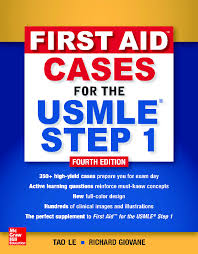
First Aid Cases for the USMLE Step 1 4th Edition
Product details
- Publisher : McGraw Hill / Medical
- Publication date : November 26, 2018
- Edition : 4th
- Language : English
- Print length : 496 pages
- ISBN-10 : 1260143139
- ISBN-13 : 978-1260143133 9781260143133 9781260143140 978-1260143140
First Aid Cases for the USMLE Step 1 4th Edition — Apply Your Knowledge, Ace the Exam
Reading First Aid for the USMLE Step 1 builds your knowledge base. But the real test — the one that determines your score — is whether you can take that knowledge and apply it to a clinical scenario you have never seen before, under time pressure, with four plausible distractors waiting to trip you up. First Aid Cases for the USMLE Step 1 4th Edition is the resource that bridges that gap, transforming passive knowledge into active clinical reasoning through carefully constructed case presentations that mirror the real examination experience.
If First Aid is the foundation, this cases companion is what turns that foundation into a score.
What Is First Aid Cases for the USMLE Step 1 4th Edition?
This book is the official case-based companion to the world-renowned First Aid for the USMLE Step 1 — one of the most widely used medical textbooks in medical licensing examination preparation globally. It is designed to be used in direct parallel with the main First Aid volume, providing clinical case scenarios that test and apply the exact content covered in the primary resource.
The fourth edition has been updated to align with the current USMLE Step 1 content outline and reflects the shift toward more clinically applied question formats that the examination has increasingly adopted in recent years.
As one of the most targeted healthcare education resources for Step 1 clinical reasoning development, this book gives you the case-based practice that question banks complement but cannot fully replace — because understanding why a case points to a specific diagnosis is different from simply practicing MCQ technique.
What Does This Book Cover?
The cases span the complete Step 1 basic science and clinical science content framework, organized by organ system and discipline. You will find clinical case presentations and discussion across:
- Cardiovascular system — congenital heart defects, ischemic heart disease, cardiomyopathies, arrhythmias, and vascular pathology cases
- Respiratory system — obstructive and restrictive lung diseases, pulmonary infections, lung tumors, and pleural conditions
- Gastrointestinal system — esophageal, gastric, intestinal, hepatic, and pancreatic disease presentations
- Renal system — glomerulonephritis, nephrotic syndrome, AKI, CKD, and electrolyte disorder cases
- Endocrine system — diabetes mellitus, thyroid disorders, adrenal diseases, and pituitary pathology
- Musculoskeletal and connective tissue — bone tumors, osteomyelitis, osteoporosis, Paget’s disease, rheumatoid arthritis, systemic lupus erythematosus, gout, and joint pathology cases
- Neurology — stroke, demyelinating disease, CNS tumors, movement disorders, and peripheral neuropathy
- Hematology and oncology — anemias, coagulation disorders, leukemias, and lymphoma presentations
- Microbiology and infectious disease — case-based application of pathogen-disease relationships
- Pharmacology — drug mechanism, adverse effect, and toxicology case presentations
- Pathology — cellular injury, inflammation, neoplasia, and systemic pathological correlations
- Behavioral science, biostatistics, and ethics case scenarios
- Reproductive and obstetric pathology and embryology cases
The musculoskeletal and rheumatological case content makes this a particularly valuable companion to orthopedic surgery books and clinical medicine books for trainees who want to apply basic science knowledge to the specialty conditions they will encounter clinically.
Who Should Use This Book?
For MBBS Students Preparing for USMLE Step 1
This book is written for MBBS students at every stage of Step 1 preparation. Used alongside the primary First Aid volume and your core MBBS books, it provides the case-based application practice that transforms textbook knowledge into examination performance. It is particularly valuable in the final weeks before your examination when application practice becomes more important than content acquisition.
For Physiotherapy Students
Physiotherapy students who study musculoskeletal, neurological, and cardiorespiratory pathology as part of their programs will find the relevant case presentations here a meaningful complement to their physiotherapy books — building the applied clinical reasoning skills that examinations and clinical practice both require.
For Orthopedic and Rheumatology Trainees
Postgraduate trainees in orthopedics and rheumatology revisiting basic science for licensing or board examinations will find the musculoskeletal and connective tissue disease cases particularly useful — especially when used alongside dedicated orthopedic surgery books and rheumatology references to connect basic science with clinical specialty knowledge.
For International Medical Graduates
IMGs preparing for USMLE Step 1 who need to develop familiarity with the case-based clinical vignette format used in US medical licensing examinations will find this book an essential part of their preparation toolkit. It builds the clinical scenario thinking that the American examination system specifically rewards — and that differs significantly from the examination styles of many international medical curricula.
For Junior Doctors and Postgraduate Candidates
Junior doctors and postgraduate candidates who want to revisit basic science through a clinical lens — for Step 1 retakes, postgraduate board preparation, or simply to strengthen their foundational knowledge — will find the case-based format here a far more engaging and clinically relevant revision approach than re-reading textbooks.
Clinical and Educational Benefits
The case-based format this book uses aligns with one of the most important shifts in modern medical education — the move away from isolated factual recall toward integrated clinical reasoning. The USMLE Step 1 has moved firmly in this direction, and this book prepares you for that reality more directly than any amount of passive reading can.
Each case in this book is designed to require you to integrate knowledge across multiple basic science disciplines simultaneously — the way clinical medicine actually works. A single case might require anatomy, physiology, pathology, microbiology, and pharmacology knowledge to reach the correct diagnosis and management conclusion.
Working through these cases will help you:
- Develop integrated clinical reasoning that draws simultaneously on multiple basic science disciplines
- Recognize classic disease presentations described in clinical vignette format
- Understand how basic science principles translate directly into clinical decision-making
- Connect case knowledge with the anatomical foundations in your anatomy books
- Build the clinical thinking that bridges basic science and the clinical medicine content in your surgery books and specialty references
Practical Learning Advantages
One of the most effective ways to use this book is in direct parallel with the primary First Aid volume — reading a section of First Aid, then immediately working through the corresponding cases here. This immediate application of new knowledge is one of the most effective consolidation strategies available and produces significantly better retention than reading alone.
The cases are also organized by organ system, making it easy to target specific areas where your question bank performance or self-assessment reveals gaps — allowing you to direct your case-based practice precisely where it will have the greatest impact on your score.
It pairs naturally with anatomy books for anatomical correlation in clinical cases and integrates smoothly into any comprehensive set of healthcare education resources assembled for a structured USMLE Step 1 preparation plan.
Key Features
- ✅ Clinical case presentations covering the complete USMLE Step 1 content outline by organ system
- ✅ Fully updated 4th edition aligned with current Step 1 examination format and content
- ✅ Designed as the official companion to First Aid for the USMLE Step 1
- ✅ Strong musculoskeletal, rheumatological, and orthopedic basic science case coverage
- ✅ Integrates multiple basic science disciplines within each clinical case
- ✅ Suitable for MBBS students, IMGs, physiotherapy students, and postgraduate board candidates
- ✅ One of the most examination-aligned medical textbooks for Step 1 clinical reasoning development
Frequently Asked Questions (FAQ)
Q: Do I need to use the main First Aid for Step 1 alongside this cases book?
While this book can be used independently, it is specifically designed as a companion to the primary First Aid for the USMLE Step 1 volume. Using both together creates a complete study system — First Aid for comprehensive content coverage and this cases book for clinical application and reasoning development. Together they form one of the most powerful healthcare education resources combinations for Step 1 preparation.
Q: Does the 4th edition reflect the current Step 1 examination format?
Yes. The 4th edition has been updated to align with the current USMLE Step 1 content outline and the increased clinical vignette emphasis that the examination now uses — making it the most relevant and examination-aligned edition currently available.
Q: Does the book cover musculoskeletal and rheumatological basic science cases?
Yes — comprehensively. Bone tumors, osteomyelitis, osteoporosis, Paget’s disease, rheumatoid arthritis, systemic lupus erythematosus, gout, and joint pathology are all represented with clinical cases that teach the basic science behind these conditions. This makes the book a strong complement to orthopedic surgery books for trainees who want to connect basic science with clinical orthopedic and rheumatological knowledge.
Q: Can physiotherapy students benefit from this book even though it is primarily Step 1 focused?
Yes. The organ-system clinical cases — particularly in musculoskeletal, neurological, and cardiorespiratory sections — develop the applied clinical reasoning that physiotherapy students need for their own examinations and clinical practice. It pairs naturally with physiotherapy books as a clinical reasoning development tool.
Q: Is this book sufficient for Step 1 case-based preparation, or do I also need an online question bank?
Both serve important but different purposes. This book develops conceptual clinical reasoning through narrative case discussion. An online question bank develops MCQ technique and examination pacing. Most successful Step 1 candidates use both — this book for reasoning development and a question bank for examination simulation and volume practice.
Conclusion — Bridge Knowledge and Performance with First Aid Cases for the USMLE Step 1 4th Edition
First Aid Cases for the USMLE Step 1 4th Edition is the clinical reasoning companion that takes everything you have studied and teaches you to apply it the way the examination demands. With comprehensive organ-system case coverage, direct alignment with the primary First Aid volume, strong musculoskeletal and rheumatological content, and an updated fourth edition that reflects current examination expectations — it gives every Step 1 candidate the applied practice that moves scores from good to great.
Whether you are an MBBS student approaching Step 1 for the first time, an IMG developing examination-format familiarity, an orthopedic or rheumatology trainee revising basic science through a clinical lens, or a physiotherapy student building applied clinical reasoning — this book delivers the case-based practice that genuinely makes a difference.
Order your copy today and start applying your Step 1 knowledge the way the examination will ask you to.
Reviews
There are no reviews yet.