Description
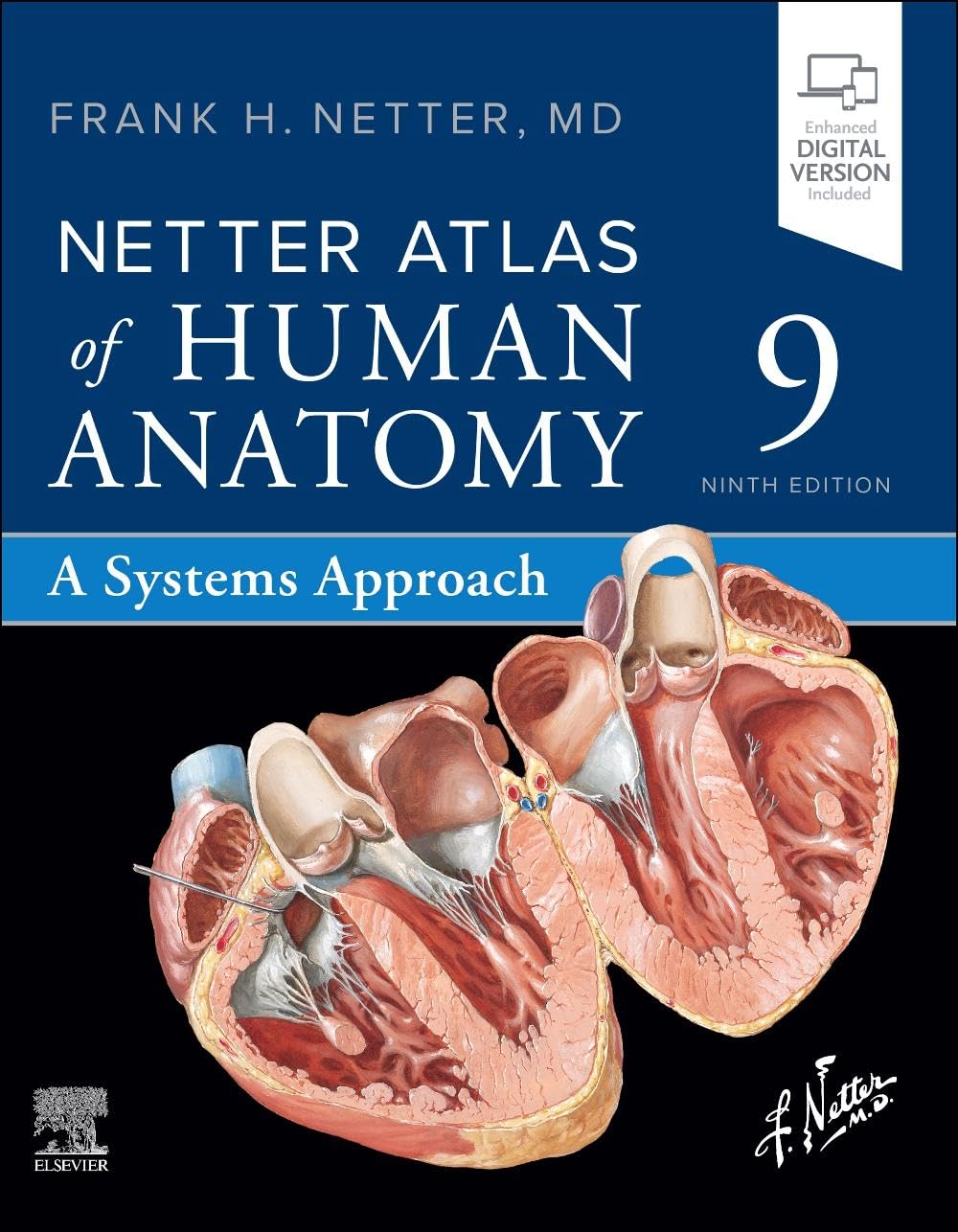
Netter Atlas of Human Anatomy A Systems Approach Netter Basic Science 9th Edition
Product details
- Publisher : Elsevier
- Publication date : April 2, 2026
- Edition : 9th
- Language : English
- Print length : 736 pages
- ISBN-10 : 0443287988
- ISBN-13 : 978-0443287985
Netter Atlas of Human Anatomy A Systems Approach Netter Basic Science 9th Edition Anatomy Illustrated With Purpose
Anatomy is the language of medicine — and the Netter Atlas of Human Anatomy: A Systems Approach 9th Edition teaches it more fluently than almost any other resource in existence. Part of the respected Netter Basic Science series, this edition brings together Frank H. Netter’s iconic medical illustrations and a thoughtfully organised systems-based layout that speaks directly to how modern healthcare professionals think, learn, and practice.
Whether you are studying for the first time or returning to anatomy as a working clinician, this atlas stands apart from standard anatomy books by offering something rare — illustration with clinical intention behind every single plate.
Inside the Netter Atlas of Human Anatomy: A Systems Approach — What You Will Find
Organised around body systems rather than regions, this edition makes it easier to study anatomy in parallel with physiology and pathology — matching the way integrated medical curricula are now delivered. Every system is covered in depth, with plates that highlight structural detail, spatial relationships, and clinical relevance simultaneously.
The atlas covers:
- Musculoskeletal system — from the architecture of the vertebral column and intervertebral discs to the fine detail of hand and foot joints, tendons, and ligamentous attachments
- Nervous system — brain, spinal cord, cranial nerve distributions, dermatomes, and peripheral nerve pathways
- Cardiovascular system — cardiac anatomy, coronary circulation, and vascular supply to all major regions
- Respiratory system — pulmonary anatomy, thoracic cage, pleura, and bronchopulmonary segments
- Digestive system — the full gastrointestinal tract from mouth to rectum, including hepatobiliary and pancreatic anatomy
- Urogenital system — renal, bladder, and reproductive anatomy for both male and female
- Head and neck — cranial base, orbital contents, cervical fascial layers, and cranial nerve exits
- Lymphatic system and endocrine gland anatomy
For clinicians and students working through orthopedic surgery books, the musculoskeletal plates — covering joint capsules, bursae, entheses, and compartment anatomy — provide an unmatched visual reference for surgical planning and pathological interpretation.
Who Will Benefit Most From This Atlas
The Netter Atlas of Human Anatomy: A Systems Approach is one of the few medical textbooks that genuinely earns its place across multiple disciplines and career stages. It is an essential resource for:
- MBBS students entering anatomy for the first time — visual learning accelerates understanding in ways that text alone cannot, and this atlas pairs seamlessly with your other MBBS books
- Physiotherapy students who work closely with musculoskeletal and neurological anatomy every day — use it alongside your physiotherapy books to build the structural knowledge that underpins effective clinical reasoning
- Orthopedic trainees who require precise visualisation of joint anatomy, ligament origins and insertions, neurovascular bundles, and approach corridors
- Rheumatology students and residents building an understanding of synovial structures, periarticular anatomy, and the connective tissue organisation that underlies inflammatory disease
- Surgeons and doctors who want a trusted visual companion to their surgery books and clinical medicine books that they can return to throughout their careers
- Anyone assembling a thorough and lasting library of healthcare education resources
Clinical and Educational Benefits
Drawn by a Doctor, for Doctors
Frank H. Netter trained and practised as a physician before dedicating himself to medical illustration. That background is embedded in every plate — structures are not simply rendered accurately, they are rendered meaningfully. Angles, layers, and relationships are chosen to reflect what matters in surgery, physical examination, and diagnostic reasoning.
This is what separates the Netter Atlas from other anatomy books and makes it an equally valid companion to surgery books, where visual anatomy has direct, practical consequences for every procedure.
Systems Organisation That Mirrors Modern Teaching
The 9th edition’s systems-based layout was designed with today’s integrated curricula in mind. When your medical school teaches cardiology, you can study cardiac anatomy. When the focus shifts to neurology, the nervous system plates are ready. This removes the disconnect that traditional regional atlases can create between anatomy class and clinical learning.
Depth That Serves Orthopedics and Rheumatology
The joint anatomy in this atlas — covering the shoulder, hip, knee, wrist, and spine in exceptional detail — gives orthopedic and rheumatology trainees a reference they will return to far beyond their student years. Understanding tissue architecture at this level strengthens clinical assessment, imaging interpretation, and procedural confidence alike.
Practical Learning Advantages
- Updated and newly added plates reflecting the latest anatomical and clinical knowledge
- Clinical annotation on key plates to connect structure directly to practice
- Muscle origin, insertion, and nerve supply tables for quick reference
- Consistent plate orientation allowing easy cross-chapter visual comparison
- Both Latin and common anatomical terminology clearly labelled throughout
- Available in print and digital formats to suit different study environments
Key Features of the Netter Atlas of Human Anatomy 9th Edition
- ✅ Systems-based organisation aligned with integrated medical and health science curricula
- ✅ 500+ full-colour plates by Frank H. Netter, MD — revised and expanded for the 9th edition
- ✅ New illustrations added to reflect advances in anatomical and clinical understanding
- ✅ Clinical notes integrated alongside plates throughout all systems
- ✅ Detailed musculoskeletal anatomy ideal for orthopedic, physiotherapy, and rheumatology learners
- ✅ Part of the Netter Basic Science series — a trusted name in healthcare education globally
- ✅ Complements both medical textbooks and clinical medicine books at all levels of training
- ✅ Suitable for MBBS, postgraduate, allied health, and continuing professional development
Frequently Asked Questions (FAQ)
What makes the 9th edition worth upgrading to?
The 9th edition includes new and revised plates based on the latest anatomical research and current clinical practice. Labelling has been refined, clinical notes have been updated, and selected illustrations have been redrawn for greater accuracy and visual clarity. For anyone starting fresh or updating their reference library, the 9th edition is the definitive current version.
Is this atlas appropriate for first-year MBBS students?
Absolutely. It is among the most recommended anatomy atlases for students entering medical school, particularly those in programmes that use an integrated or systems-based teaching model. The visual clarity of Netter’s plates makes anatomical structures memorable in a way that written descriptions rarely achieve on their own.
How does this help physiotherapy students specifically?
Physiotherapy training is heavily grounded in musculoskeletal and neuromuscular anatomy — and both are covered here in exceptional depth. Students gain a precise visual understanding of muscle attachments, peripheral nerve courses, and joint structures that directly supports their clinical and practical work. Used alongside your physiotherapy books, it provides a complete structural foundation.
Is this useful for rheumatology trainees?
Very much so. The detailed illustrations of synovial joints, tendon sheaths, bursae, entheses, and connective tissue organisation give rheumatology trainees the anatomical reference they need to understand inflammatory, degenerative, and autoimmune conditions at a structural level — and to communicate those findings more clearly to patients and colleagues.
How does this atlas complement orthopedic surgery training?
Orthopedic surgery demands a precise, three-dimensional understanding of the body that textbooks alone cannot always provide. This atlas fills that gap — illustrating surgical landmarks, neurovascular relationships, and joint anatomy with the detail and perspective that translates directly into theatre. Alongside your orthopedic surgery books, it rounds out your preparation for both exams and the operating room.
Final Thoughts – Why the Netter Atlas of Human Anatomy: A Systems Approach 9th Edition Is a Career-Long Investment
Some references live on your shelf for a year. The Netter Atlas of Human Anatomy: A Systems Approach 9th Edition lives there for a lifetime. From your earliest anatomy sessions as a student to your most complex clinical assessments as a specialist, these plates remain the clearest, most trusted window into the human body available in print.
If you are building your essential set of MBBS books, expanding a collection of quality healthcare education resources, or searching for an atlas that holds its own beside your surgery books and clinical medicine books — this is the edition that delivers, every time.
Add the Netter Atlas of Human Anatomy: A Systems Approach (Netter Basic Science) 9th Edition to your cart today — and bring the precision of Netter’s vision into every stage of your medical career.


Reviews
There are no reviews yet.