Description
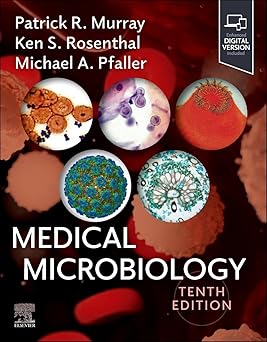
Medical Microbiology 10th Edition
Product details
- Publisher : Elsevier
- Publication date : May 15, 2025
- Edition : 10th
- Language : English
- Print length : 1025 pages
- ISBN-10 : 0443261334
- ISBN-13 : 978-0443261336 9780443261336
Medical Microbiology 10th Edition Comprehensive, Current, and Clinically Essential
Understanding how microorganisms cause disease, how the human body responds, and how clinicians intervene effectively is not optional knowledge for any healthcare professional — it is foundational. Medical Microbiology 10th Edition delivers that foundation with the depth, clarity, and clinical orientation that modern medical education demands, making it one of the most complete and trusted microbiology references available for students and practitioners alike.
Now in its tenth edition, this landmark textbook continues to set the standard for medical microbiology education across the world.
What Is Medical Microbiology 10th Edition?
Medical Microbiology by Murray, Rosenthal, and Pfaller is one of the most widely adopted and consistently respected medical textbooks in microbiology education globally. Used in medical schools, nursing programs, and allied health curricula across dozens of countries, it has earned its reputation through decade after decade of academically rigorous, clinically focused, and accessibly written content.
The 10th edition has been comprehensively revised to reflect the latest developments in microbiology science — including advances in molecular diagnostics, updated antimicrobial resistance data, newly characterized pathogens, and evolving understanding of host-pathogen interactions and immunological responses.
It is one of the cornerstone healthcare education resources for anyone who needs to understand microbiology at the level that clinical practice and postgraduate examinations demand.
What Does This Book Cover?
The 10th edition covers the complete spectrum of medical microbiology with scientific rigor and consistent clinical application. Topics include:
- Bacteriology — bacterial structure, genetics, virulence mechanisms, and in-depth coverage of clinically significant bacteria including Staphylococcus, Streptococcus, Mycobacterium, Neisseria, Enterobacteriaceae, Pseudomonas, Clostridium, and anaerobes
- Virology — viral classification, replication cycles, pathogenesis, and comprehensive coverage of herpesviruses, respiratory viruses, enteroviruses, hepatitis viruses, HIV, and emerging viral threats
- Mycology — medical mycology covering superficial, subcutaneous, and systemic fungal infections with antifungal pharmacology
- Parasitology — protozoa, helminths, and ectoparasites with clinical presentations, diagnostic methods, and treatment principles
- Immunology — innate and adaptive immune responses, immunopathology, vaccines, and immunological mechanisms underlying infectious disease
- Antimicrobial pharmacology — drug classes, mechanisms of action, pharmacokinetics, resistance mechanisms, and clinical prescribing principles
- Musculoskeletal infections — osteomyelitis, septic arthritis, prosthetic joint infections, and orthopedic surgical site infections with relevant microbial pathogens
- Rheumatological aspects of infectious disease — reactive arthritis, Lyme disease, post-infectious inflammatory syndromes, and infection-triggered autoimmune conditions
- Clinical and diagnostic microbiology — laboratory methods, culture techniques, molecular diagnostics, serology, and antimicrobial susceptibility testing
- Infection control, epidemiology, and hospital-acquired infections
The musculoskeletal infection and rheumatological infectious disease content makes this a naturally valuable companion to orthopedic surgery books and clinical medicine books for trainees and clinicians in those specialties.
Who Should Use This Book?
For MBBS Students Across All Clinical Years
Medical students at both preclinical and clinical stages of training will find this book an essential component of their MBBS books collection. The clear progression from basic microbiology science to clinical application makes it appropriate for first-year students learning foundational concepts and for clinical-year students applying microbiological knowledge to patient management scenarios.
For Orthopedic Trainees and Surgeons
Orthopedic trainees and surgeons who manage bone infections, septic arthritis, periprosthetic infections, and surgical wound complications will find the musculoskeletal infection sections directly applicable to clinical decision-making. This textbook pairs naturally with orthopedic surgery books to provide the microbiological depth behind surgical infection management — from pathogen identification to targeted antimicrobial therapy.
For Rheumatology Trainees
Rheumatology trainees who encounter reactive arthritis, Lyme arthritis, infectious triggers of inflammatory disease, and septic arthritis as part of their differential diagnoses will find the infectious disease and immunology sections here essential reading. Combined with clinical medicine books, it provides a complete picture of the microbiology-rheumatology interface.
For Physiotherapy Students and Professionals
Physiotherapy students and qualified practitioners who work with patients recovering from musculoskeletal infections, post-surgical infections, or infection-related inflammatory conditions will find the relevant microbiology and infection management content here a meaningful extension of their physiotherapy books — supporting safer, more informed rehabilitation practice.
For Postgraduate Doctors and Clinical Practitioners
Clinicians across all specialties — from infectious disease specialists to general practitioners and hospital physicians — will find the 10th edition a comprehensive and authoritative reference for antimicrobial prescribing, diagnostic interpretation, and infection management guidance that keeps clinical practice evidence-based and current.
Clinical and Educational Benefits
One of the defining strengths of this textbook is the consistency with which it connects microbiological science to clinical medicine. Every section is written with the clinical scenario in mind — helping readers understand not just what an organism is, but what it does to patients, how it is diagnosed, and how it is treated.
This clinical orientation is maintained throughout the 10th edition with updated case presentations, clinical correlation boxes, and management summaries that make the transition from basic science to bedside application genuinely seamless.
Working through this book will help you:
- Build comprehensive microbiological knowledge across bacteriology, virology, mycology, and parasitology in clinical context
- Understand antimicrobial resistance at a mechanistic level that improves prescribing decisions
- Recognize the microbiological basis of complex clinical presentations including bone and joint infections
- Connect infection science with the pathological and anatomical knowledge in your anatomy books
- Develop the integrated clinical thinking that links microbiology with the surgical and medical content in your surgery books and specialty references
Practical Learning Advantages
The 10th edition is structured to serve multiple learning needs simultaneously. Students can use it as their primary microbiology textbook, working systematically through each section in parallel with their medical school curriculum. Clinicians and postgraduate trainees can use it as a reference resource — searching by organism, clinical syndrome, or antimicrobial agent as specific clinical or examination questions arise.
The writing style maintains scientific accuracy while remaining accessible — avoiding the impenetrable density that makes some microbiology references frustrating to use in real study sessions. Tables, summary boxes, and clinical correlation features throughout the book make navigation efficient and revision targeted.
It integrates naturally with clinical medicine books for cross-specialty infectious disease learning and complements any complete set of healthcare education resources for medical students and postgraduate trainees in any clinical specialty.
Key Features
- ✅ Comprehensive single-volume coverage of bacteriology, virology, mycology, parasitology, and immunology
- ✅ Fully updated 10th edition with current antimicrobial resistance data and emerging pathogens
- ✅ Consistent clinical orientation — every organism connected to patient presentation and management
- ✅ Detailed musculoskeletal infection and rheumatological infectious disease coverage
- ✅ Updated diagnostic microbiology including molecular and point-of-care methods
- ✅ Widely used globally as a primary medical school microbiology textbook
- ✅ Suitable for MBBS students, postgraduate trainees, and practicing clinicians across all specialties
Frequently Asked Questions (FAQ)
Q: Is this book suitable for USMLE Step 1 microbiology preparation?
Yes. Medical Microbiology 10th Edition is one of the most recommended comprehensive references for USMLE Step 1 microbiology. Its depth of coverage and clinical orientation align well with the applied microbiology knowledge that Step 1 tests. Most candidates use it alongside a high-yield review resource and question bank for the most complete preparation.
Q: Does the 10th edition cover antimicrobial resistance adequately?
Yes — and this is one of the areas most thoroughly updated in the 10th edition. Antimicrobial resistance mechanisms, MRSA, ESBL-producing organisms, carbapenem-resistant bacteria, and antifungal resistance are all covered with current epidemiological data and clinical management implications.
Q: Does this textbook cover musculoskeletal and orthopedic infections in adequate depth?
Yes. Osteomyelitis, septic arthritis, prosthetic joint infections, and surgical site infections are covered with the microbiological depth that orthopedic trainees, surgeons, and rheumatologists need in clinical practice — making it a strong complement to orthopedic surgery books for any clinician managing bone and joint infections.
Q: Can physiotherapy students use this as a reference?
Absolutely. Physiotherapy students who encounter patients with musculoskeletal infections, post-surgical wound complications, or infection-related inflammatory conditions will find the relevant sections here a valuable extension of their physiotherapy books, particularly around infection recognition, antimicrobial principles, and infection control.
Q: How does Medical Microbiology 10th Edition compare to Jawetz?
Both are excellent comprehensive microbiology textbooks and among the most trusted medical textbooks in their category. Murray’s Medical Microbiology is often praised for its clinical case integration and accessibility, while Jawetz is known for its scientific depth in basic microbiology. Many students and clinicians use both — choosing based on the learning context and level of detail required.
Conclusion — Build Your Microbiology Foundation with Medical Microbiology 10th Edition
Medical Microbiology 10th Edition is the comprehensive, clinically oriented, and authoritative microbiology textbook that medical education relies on — and for good reason. With complete coverage from bacteriology and virology through to mycology and parasitology, updated antimicrobial resistance content, strong musculoskeletal and rheumatological infection coverage, and consistent clinical application throughout, it gives every medical student, postgraduate trainee, and practicing clinician the microbiological knowledge that safe, effective clinical practice demands.
Whether you are an MBBS student building your foundational knowledge, an orthopedic or rheumatology trainee deepening your infectious disease understanding, a physiotherapy professional developing broader clinical awareness, or a postgraduate doctor seeking a comprehensive and current microbiology reference — the 10th edition delivers the depth, the clarity, and the clinical relevance your medical education deserves.
Order your copy today and invest in the microbiology knowledge that will inform your clinical decisions for the entirety of your medical career.
Reviews
There are no reviews yet.