Description
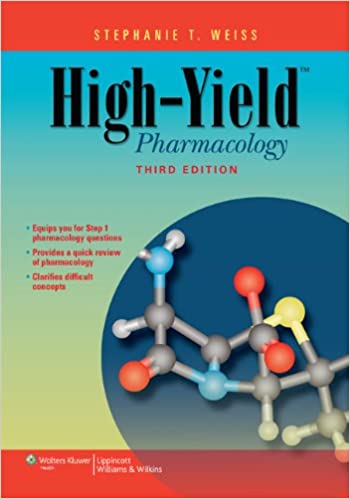
High Yield Pharmacology 3rd Edition
Product details
Publisher : Lippincott Williams & Wilkins
Publication date : January 1, 2009
Edition : 3rd
Language : English
Print length : 166 pages
ISBN-10 : 0781792738
ISBN-13 : 978-0781792738
High Yield Pharmacology 3rd Edition – Targeted, Exam-Smart Pharmacology Review for Medical Students and Licensing Exam Candidates
In a subject as vast as pharmacology, knowing what to focus on is half the battle. High Yield Pharmacology 3rd Edition by Barbara Rosenfeld solves that problem decisively. Part of the trusted High Yield series, this book identifies and delivers precisely the pharmacological knowledge that matters most for licensing examinations — stripping away low-priority content and keeping the focus exactly where it needs to be for students preparing for USMLE Step 1, Step 2, and equivalent assessments. If you want a lean, targeted pharmacology resource that never wastes your revision time, this is the one.
Straightforward in structure, accurate in content, and built specifically around what licensing examinations actually test, this third edition continues to earn its reputation as one of the most efficient pharmacology review books available for medical learners at every stage.
What Does High Yield Pharmacology 3rd Edition Cover?
This book organises pharmacology into clearly defined, high-priority sections — giving students a clean, navigable framework for revision. Every drug class is presented with its mechanism, indications, adverse effects, and clinical relevance clearly outlined, making active recall and exam preparation far more effective.
Topics covered include:
- General pharmacology principles — pharmacokinetics, pharmacodynamics, bioavailability, and drug interactions
- Autonomic nervous system drugs — cholinergic, adrenergic, and neuromuscular blocking agents
- Central nervous system drugs — analgesics, opioids, sedatives, antiepileptics, antidepressants, and antipsychotics
- Cardiovascular pharmacology — antihypertensives, antiarrhythmics, diuretics, and anticoagulants
- Respiratory pharmacology — bronchodilators, anti-inflammatory agents, and antihistamines
- Musculoskeletal and pain pharmacology — NSAIDs, corticosteroids, DMARDs, skeletal muscle relaxants, and gout drugs
- Renal pharmacology — diuretic classes and their clinical applications
- Endocrine pharmacology — insulin types, oral antidiabetics, thyroid agents, and steroid hormones
- Antimicrobial pharmacology — antibiotic classes, antifungals, antivirals, and key resistance concepts
- Chemotherapy and immunosuppressive agents
The musculoskeletal pharmacology section — covering NSAIDs, corticosteroids, disease-modifying antirheumatic drugs, and skeletal muscle relaxants — is particularly relevant for students studying alongside orthopedic surgery books, offering the pharmacological context that surgical texts typically do not provide in sufficient depth.
Who Should Use This Book?
MBBS and Undergraduate Medical Students
Among the most strategically useful additions to any collection of MBBS books, this edition is especially valuable for students in the weeks leading up to licensing examinations. Its lean format lets students move through drug classes quickly, identify the highest-priority content efficiently, and focus their limited revision time where it will have the greatest examination impact.
Orthopedic and Rheumatology Trainees
For trainees managing inflammatory joint conditions, musculoskeletal pain, bone metabolic disorders, and perioperative pharmacology, having clear, concise drug knowledge at their fingertips is essential. This edition’s focused coverage of anti-inflammatory agents, biologics, bone-modifying drugs, and analgesic classes makes it a practical quick-reference companion to anatomy books and clinical medicine books in specialty training settings.
Physiotherapy Students
For students exploring physiotherapy books with a pharmacology component, this edition provides a clear, no-filler overview of the drug classes most relevant to physiotherapy practice — including pain management drugs, anti-inflammatory agents, muscle relaxants, and anticoagulants used in rehabilitation patient populations.
Practicing Doctors and Healthcare Educators
Clinicians preparing for postgraduate licensing examinations or seeking a rapid, organised pharmacology refresher will find this edition highly efficient. It sits naturally within a set of healthcare education resources used for exam preparation, clinical orientation, and self-directed professional development.
Clinical and Educational Benefits
What distinguishes High Yield Pharmacology 3rd Edition from other medical textbooks in the pharmacology category is its editorial discipline. Every piece of content in this book has been selected because it is high-priority — either commonly tested, clinically significant, or both. That discipline translates into a revision experience that feels purposeful rather than overwhelming, which matters enormously when examination pressure is at its highest.
Furthermore, the book’s consistent structure — mechanism, indications, adverse effects, and clinical notes for each drug class — trains students to think about drugs in the systematic way that both examination questions and clinical decision-making demand. That mental framework becomes automatic with repeated use, which is exactly what builds examination confidence.
Key Features of This Edition
- ✅ Strategically curated content — only the highest-yield pharmacology included
- ✅ Consistent drug class structure — mechanism, indications, side effects, and clinical notes
- ✅ Clean, distraction-free layout designed for focused, efficient revision
- ✅ High-yield tables summarising drug comparisons and adverse effect profiles
- ✅ Mnemonics and clinical pearls woven throughout for better retention
- ✅ Strong musculoskeletal, CNS, and antimicrobial drug class coverage
- ✅ Ideal compact companion to surgery books and clinical board review resources
Practical Learning Advantages
One of the most practical strengths of this book is what it deliberately leaves out. By removing lower-priority drug details and concentrating only on what is most testable and most clinically relevant, this edition creates a revision experience where every page genuinely moves the needle. Students consistently report that working through this book leaves them feeling more prepared — not more overwhelmed — which is a rare quality in any pharmacology revision resource.
When paired with anatomy books and a core physiology text, High Yield Pharmacology completes the foundational pre-clinical triad — structure, function, and drug management — that prepares students to think holistically about patient care from the moment they enter clinical training.
Additionally, for students who are working through orthopedic surgery books or preparing for specialty rotations, the targeted drug class summaries in this edition — particularly around perioperative analgesia, antibiotic selection, DVT prophylaxis, and anti-inflammatory management — provide exactly the pharmacological reference knowledge that surgical and musculoskeletal clinical settings require on a daily basis.
Frequently Asked Questions (FAQ)
Is High Yield Pharmacology 3rd Edition enough for USMLE Step 1?
It is an excellent high-yield companion for Step 1 pharmacology preparation. Many students use it alongside a more comprehensive resource such as Rapid Review Pharmacology to cover both depth and targeted revision — using High Yield for prioritisation and focused review in the final exam weeks.
How is this different from Rapid Review Pharmacology?
Rapid Review Pharmacology uses a dual-column format with clinical vignettes and a full practice examination, making it slightly more detailed and test-simulation focused. High Yield Pharmacology is leaner and more streamlined — ideal for students who need maximum information density in minimum reading time. Both are strong resources and complement each other well.
Is this book useful for rheumatology and orthopedic trainees?
Yes. The concise, targeted coverage of NSAIDs, DMARDs, corticosteroids, biologic agents, gout treatments, skeletal muscle relaxants, and anticoagulants makes this a practical and quickly accessible pharmacology reference for trainees in both specialties, particularly when time for reading is limited.
Can physiotherapy students benefit from this book?
Definitely. The clear, focused drug summaries covering analgesics, anti-inflammatory drugs, muscle relaxants, and anticoagulants give physiotherapy students the pharmacological awareness they need to understand their patients’ treatment plans and contribute meaningfully to multidisciplinary clinical discussions.
Is the 3rd edition still relevant for current examinations?
Yes. The core pharmacological principles and drug classes covered in this edition remain central to licensing examinations. While pharmacology evolves with new drug approvals, the foundational content of this edition continues to be examination-relevant and clinically applicable across most major assessment formats.
Order High Yield Pharmacology 3rd Edition and Revise Smarter Before Your Licensing Exam
When examination preparation demands precision and efficiency above all else, High Yield Pharmacology 3rd Edition delivers both — in a format that respects your time, targets your energy, and consistently focuses on what will actually make a difference to your examination score. It is lean, purposeful, and built for the way modern medical students need to study.
It stands as one of the most strategically effective pharmacology medical textbooks available in the High Yield series — trusted by thousands of medical students and clinicians preparing for some of the world’s most rigorous licensing assessments.
Add it to your cart today and explore our complete range of MBBS books, clinical medicine books, and healthcare education resources — because focused preparation is the most powerful preparation there is.
Reviews
There are no reviews yet.