Description
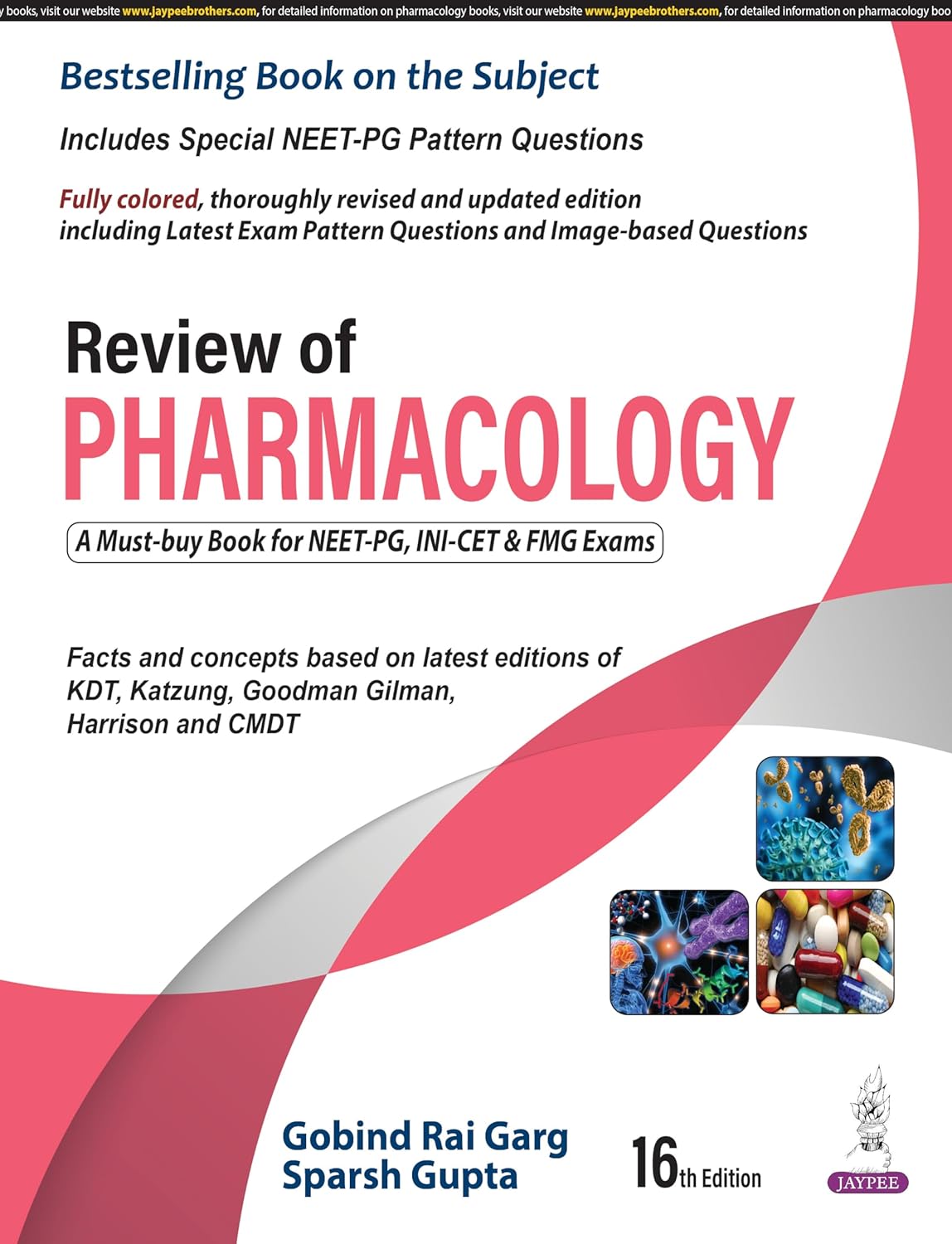
Review of Pharmacology 16th Edition
Product details
Publisher : Jaypee Brothers Medical Publishers Pvt Ltd
Publication date : October 1, 2022
Edition : 16th
Language : English
Print length : 550 pages
ISBN-10 : 9354658776
ISBN-13 : 978-9354658778
Review of Pharmacology 16th Edition – The Most Trusted Pharmacology Revision Guide for Medical Students and Healthcare Professionals
When it comes to pharmacology revision that is thorough, exam-focused, and genuinely easy to use, one title has stood the test of time across South Asian medical colleges. The Review of Pharmacology 16th Edition by Gobind Rai Garg and Sparsh Gupta continues that legacy with fully updated content, a clean exam-oriented format, and the kind of clinical relevance that makes pharmacology feel directly useful — not just something to get through before finals. Whether you are preparing for university examinations, licensing assessments, or postgraduate entrance tests, this edition delivers exactly what you need.
Now in its sixteenth edition, this book has been refined over decades of student feedback and clinical evolution — making it one of the most dependable pharmacology resources available for undergraduate and postgraduate medical learners.
What Does Review of Pharmacology 16th Edition Cover?
This comprehensive review text covers the full scope of undergraduate and postgraduate pharmacology, organised by drug class and body system for easy navigation and efficient revision. Every major therapeutic area is addressed with clarity and clinical context.
Key topics covered include:
- General pharmacology — pharmacokinetics, pharmacodynamics, drug receptor interactions, and adverse effects
- Autonomic pharmacology — cholinergic, adrenergic, and autonomic blocking agents
- Cardiovascular pharmacology — antihypertensives, antiarrhythmics, anticoagulants, and heart failure drugs
- Respiratory pharmacology — bronchodilators, anti-inflammatory agents, and cough suppressants
- Central nervous system pharmacology — anaesthetics, analgesics, antiepileptics, antidepressants, and antipsychotics
- Musculoskeletal pharmacology — NSAIDs, DMARDs, corticosteroids, muscle relaxants, and gout treatments
- Endocrine pharmacology — insulin, antidiabetic drugs, thyroid agents, and steroid hormones
- Antimicrobial pharmacology — antibiotics, antifungals, antivirals, and antiparasitic drugs
- Chemotherapy — anticancer drugs, immunosuppressants, and biological agents
- GIT pharmacology, renal pharmacology, and haematological agents
The musculoskeletal pharmacology chapters — covering NSAIDs, disease-modifying antirheumatic drugs (DMARDs), biologics, corticosteroids, and uricosuric agents — are particularly valuable for students studying alongside orthopedic surgery books and preparing for clinical rotations in surgical and musculoskeletal specialties.
Who Should Use This Book?
MBBS and Undergraduate Medical Students
This is one of the most recommended titles among MBBS books for pharmacology preparation. Its structured, point-based format makes it ideal for students who need to cover large volumes of drug information efficiently — especially during examination revision season when time is at its tightest.
Orthopedic and Rheumatology Trainees
For trainees managing conditions such as rheumatoid arthritis, osteoarthritis, gout, ankylosing spondylitis, and bone metabolic disorders, a strong grasp of musculoskeletal pharmacology is non-negotiable. This edition’s dedicated coverage of anti-inflammatory drugs, immunomodulatory agents, biologics, and bone-modifying therapies makes it an essential companion to anatomy books and clinical medicine books for building a complete pharmacological knowledge base in musculoskeletal medicine.
Physiotherapy Students
Among the most clinically useful physiotherapy books additions, this edition helps physiotherapy students understand the pharmacological context of the conditions they treat — including pain management strategies, muscle relaxant use, anti-inflammatory protocols, and the drug interactions relevant to rehabilitation settings.
Practicing Doctors and Healthcare Educators
Clinicians preparing for postgraduate entrance examinations or refreshing drug knowledge for clinical teaching will find this edition highly effective. It integrates naturally into any collection of healthcare education resources used in foundation training, residency preparation, and continuing medical education programmes.
Clinical and Educational Benefits
What makes the Review of Pharmacology 16th Edition stand apart from other medical textbooks in the pharmacology category is the way it balances depth with efficiency. Rather than overwhelming students with excessive mechanistic detail, it delivers clinically actionable drug knowledge — mechanisms, indications, contraindications, adverse effects, and drug interactions — in a format that is both memorable and examination-ready.
Furthermore, the book’s consistent attention to recently approved drugs, updated drug classifications, and revised clinical guidelines ensures that the pharmacological knowledge students gain is current, accurate, and directly applicable in modern clinical environments.
Key Features of This Edition
- ✅ Fully updated drug content reflecting current clinical guidelines and newly approved agents
- ✅ Structured, point-based format designed for rapid, efficient revision
- ✅ High-yield tables comparing drug classes, mechanisms, and adverse effect profiles
- ✅ Mnemonics and memory aids integrated throughout for better retention
- ✅ Exam-pattern questions aligned with MBBS, USMLE, and postgraduate entrance formats
- ✅ Strong musculoskeletal, CNS, and antimicrobial pharmacology coverage
- ✅ Excellent revision companion to surgery books and clinical pharmacology references
Practical Learning Advantages
One of the most practical strengths of this book is how quickly students can move through large amounts of drug information without losing accuracy. The point-based layout, comparison tables, and class-by-class organisation allow focused, targeted revision — whether you are studying a single drug class before a clinical rotation or completing a full pharmacology review before a licensing examination.
When paired with anatomy books and physiology resources, this book helps students understand not just what a drug does but why it works — connecting pharmacological mechanisms to the anatomical and physiological systems they have already studied. That integration creates a level of clinical understanding that isolated pharmacology revision simply cannot produce.
Additionally, for students who are working through orthopedic surgery books alongside pharmacology revision, the dedicated coverage of perioperative drugs, analgesics, anticoagulants, antibiotics, and musculoskeletal agents in this edition provides the pharmacological layer that surgical texts often summarise too briefly to be truly useful.
Frequently Asked Questions (FAQ)
Is Review of Pharmacology 16th Edition suitable for MBBS final year students?
Absolutely. It is specifically designed for undergraduate pharmacology examinations and aligns closely with MBBS final year and professional examination syllabi. Its structured format and exam-pattern questions make it one of the most effective revision tools available for final year preparation.
What is new in the 16th Edition?
The 16th edition includes updated drug classifications, newly approved pharmacological agents, revised clinical guidelines across multiple therapeutic areas, updated adverse effect profiles, and new exam-style questions — ensuring the content reflects the current state of both pharmacological science and clinical practice.
Is this book useful for rheumatology and orthopedic trainees?
Yes, very much so. The comprehensive coverage of NSAIDs, corticosteroids, DMARDs, biologic agents, uric acid-lowering drugs, bone-modifying therapies, and muscle relaxants makes it a highly relevant pharmacological reference for both orthopedic and rheumatology trainees at all stages of specialty training.
Can physiotherapy students benefit from this pharmacology review?
Definitely. Understanding the pharmacological management of conditions physiotherapists encounter — including pain syndromes, inflammatory disorders, muscle spasticity, and post-surgical recovery — is increasingly expected in modern physiotherapy practice, and this edition covers all of those areas clearly and concisely.
Is it suitable for postgraduate entrance examination preparation?
Yes. It is widely used for postgraduate medical entrance examinations across South Asia, including PGIMER, AIIMS, and other competitive assessments. Its high-yield format, exam-pattern questions, and updated drug content make it one of the most effective resources for postgraduate pharmacology preparation.
Order Review of Pharmacology 16th Edition and Master Drug Knowledge That Works in the Real World
From general pharmacokinetics to the most clinically relevant drug classes in musculoskeletal medicine, cardiovascular care, infectious disease, and beyond, the Review of Pharmacology 16th Edition gives you the pharmacological foundation to prescribe, advise, and reason confidently in any clinical setting. It is thorough where it needs to be, concise where it counts, and consistently aligned with how pharmacology is actually tested and applied in practice.
It stands as one of the most trusted pharmacology medical textbooks in South Asian medical education — and the sixteenth edition raises that standard further with updated, accurate, and examination-ready content throughout.
Add it to your cart today and browse our complete range of MBBS books, clinical medicine books, and healthcare education resources — because confident clinical practice starts with knowing your pharmacology.
Reviews
There are no reviews yet.