Description
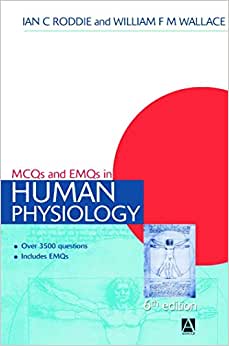
MCQs and EMQs in Human Physiology 6th Edition
Product details
- Publisher : CRC Press
- Publication date : June 30, 2017
- Edition : 6th
- Language : English
- Print length : 364 pages
- ISBN-10 : 113845110X
- ISBN-13 : 978-1138451100 9781138451100
MCQs and EMQs in Human Physiology 6th Edition — Two Question Formats, One Complete Physiology Review
Physiology examinations have evolved — and so has the way you need to prepare for them. The MCQs and EMQs in Human Physiology 6th Edition is one of the few physiology self-assessment resources that combines both multiple-choice questions and extended matching questions in a single, well-organized volume, giving you comprehensive preparation for the full range of formats used in modern medical examinations.
If your physiology exam uses EMQs — and increasingly, most do — this is one of the most targeted and effective preparation tools you will find.
What Is MCQs and EMQs in Human Physiology 6th Edition?
This book is a dual-format physiology self-assessment resource that has been refined across six editions to closely reflect the question styles used in medical licensing and university examinations worldwide. It is widely regarded as one of the most exam-relevant medical textbooks available for physiology practice at the undergraduate and early postgraduate level.
The sixth edition has been updated to align with current medical curricula and examination standards, ensuring that the content you practice with is the content that actually gets tested. The inclusion of EMQs — extended matching questions — is what truly distinguishes this book from standard MCQ collections and makes it an especially valuable part of any serious student’s healthcare education resources.
What Does This Book Cover?
The book covers all major physiological systems through both MCQ and EMQ formats, providing varied question styles that deepen understanding and build examination flexibility. Topics include:
- Cardiovascular physiology — cardiac output, blood pressure control, Frank-Starling law, and microcirculation
- Respiratory physiology — lung volumes, gas exchange, oxygen transport, and chemoreceptor control
- Renal physiology — filtration, tubular transport, concentration mechanisms, and acid-base balance
- Gastrointestinal physiology — motility, secretion, digestion, and nutrient absorption
- Endocrine physiology — hypothalamic-pituitary regulation, thyroid, adrenal, and pancreatic hormones
- Neurophysiology — action potentials, synaptic transmission, sensory and motor pathways, and autonomic regulation
- Musculoskeletal physiology — skeletal muscle mechanics, smooth muscle, neuromuscular junction, and bone physiology
- Reproductive physiology — menstrual cycle, pregnancy, parturition, and lactation
- Blood physiology — red cell function, hemostasis, coagulation, and immune responses
- Exercise physiology and temperature regulation
The musculoskeletal and neurophysiology content makes this particularly relevant when studied alongside orthopedic surgery books and anatomy books — helping students integrate physiological function with structural knowledge and clinical application.
Who Should Use This Book?
For MBBS Students Facing Mixed-Format Exams
Medical students whose university or licensing examinations include both MCQs and EMQs will find this book directly aligned with what they face on exam day. It fits naturally alongside core MBBS books and provides the dual-format practice that single-style question banks simply cannot offer.
For Physiotherapy Students
Physiology is a core science in physiotherapy education — from understanding cardiovascular responses to therapeutic exercise, to the neuromuscular basis of movement and rehabilitation. This book pairs directly with physiotherapy books by offering structured, applied physiology practice across the systems most relevant to physiotherapy clinical work.
For Orthopedic and Rheumatology Trainees
Trainees in orthopedics and rheumatology revisiting musculoskeletal physiology, bone metabolism, calcium regulation, and connective tissue physiology will find targeted and relevant practice here. It works well as a complement to dedicated orthopedic surgery books and clinical medicine books for trainees who want a stronger basic science foundation.
For Postgraduate Entrance Candidates
Doctors preparing for postgraduate entrance examinations in surgery, medicine, or any specialty that tests basic science knowledge will find the EMQ format particularly valuable — as postgraduate assessments increasingly move toward extended matching and scenario-based questions that test applied rather than recalled knowledge.
For Allied Health and Nursing Students
Allied health students in respiratory therapy, occupational therapy, sports science, and nursing who need to demonstrate applied physiology knowledge for their own licensing or university assessments will also find both question formats here accessible and highly practical.
Clinical and Educational Benefits
The dual-format structure of this book is its most distinctive educational advantage. MCQs test focused recall and concept recognition. EMQs go further — they present a lead-in scenario and a list of options, requiring you to reason through a clinical or physiological context before selecting the best match.
This combination means you are not just practicing one type of thinking. You are building the full range of cognitive skills that modern medical examinations assess.
Working through this book will help you:
- Master both MCQ and EMQ question strategies for physiology assessments
- Develop applied physiological reasoning that extends beyond factual recall
- Recognize how physiological principles present in clinical and examination scenarios
- Connect physiology with the pathological processes covered in your clinical medicine books
- Strengthen the basic science foundation that supports your surgery books and specialty training
Practical Learning Advantages
One of the most effective ways to use this book is in topic blocks — completing both the MCQ and EMQ sections for each physiological system before moving to the next. This approach ensures that you practice the same concepts across two question formats, deepening retention and exposing any gaps that a single format might miss.
The EMQ format is particularly good at revealing partial understanding — the kind of knowledge that answers a simple MCQ but falls apart when the question adds context or requires selection from a broader option list.
The book integrates naturally with anatomy books for structure-function connections and with any set of healthcare education resources built around preclinical or early clinical examination preparation. Students simultaneously working with MBBS books on related subjects will find that practicing physiology in this active, dual-format way significantly accelerates their overall retention and cross-subject integration.
Key Features
- ✅ Dual-format self-assessment — both MCQs and EMQs in a single resource
- ✅ Comprehensive coverage of all major physiological systems
- ✅ Fully updated 6th edition aligned with current medical examination standards
- ✅ EMQ format develops applied reasoning beyond simple recall
- ✅ Includes musculoskeletal, neurological, cardiovascular, renal, and endocrine physiology
- ✅ Suitable for MBBS students, physiotherapy students, postgraduate candidates, and allied health learners
- ✅ One of the most exam-format-aligned medical textbooks available for physiology self-assessment
Frequently Asked Questions (FAQ)
Q: What is the difference between MCQs and EMQs, and why does it matter?
MCQs present a question with a small set of options — typically four or five — and require selection of the single best answer. EMQs present a longer list of options alongside a clinical or physiological scenario, requiring you to match the best option from a broader set. EMQs test more complex reasoning and are increasingly used in UK, Irish, and international medical examinations. Practicing both formats is essential if your exam uses either — and this book is one of the few resources that covers both comprehensively.
Q: Is this book suitable for USMLE Step 1 preparation?
The content coverage aligns well with USMLE Step 1 physiology, though the USMLE primarily uses single best answer MCQs rather than EMQs. The MCQ sections of this book are directly applicable to Step 1 preparation, while the EMQ sections add valuable applied reasoning practice that strengthens physiology understanding more broadly.
Q: Does the book cover musculoskeletal physiology relevant to orthopedic trainees?
Yes — musculoskeletal physiology including muscle contraction, bone physiology, neuromuscular junction function, and calcium metabolism is covered in both MCQ and EMQ formats. This makes it a useful companion to orthopedic surgery books for trainees who want to strengthen their physiological foundation alongside surgical knowledge.
Q: Can physiotherapy students use this book effectively?
Absolutely. The cardiovascular, respiratory, musculoskeletal, and neurophysiology sections are directly relevant to physiotherapy practice and education. The dual-format approach also mirrors the assessment styles used in many physiotherapy programs, making this book a strong complement to physiotherapy books for exam preparation.
Q: How does the 6th edition differ from earlier editions?
The 6th edition has been reviewed and updated to reflect current physiology teaching standards and examination formats — ensuring that both the question content and the explanatory material remain aligned with what students are actually tested on today. It is among the most current editions in this category of medical textbooks for physiology self-assessment.
Conclusion — Prepare for Every Question Format with MCQs and EMQs in Human Physiology 6th Edition
The MCQs and EMQs in Human Physiology 6th Edition is the physiology self-assessment resource that prepares you for the full range of what modern medical examinations can throw at you. With comprehensive system coverage, genuine dual-format practice, and content carefully aligned with current examination standards, it gives every medical and allied health student a meaningful and practical edge.
Whether you are an MBBS student preparing for university physiology exams or licensing assessments, a physiotherapy student mastering applied physiological science, an orthopedic trainee revisiting musculoskeletal physiology, or a postgraduate candidate building basic science confidence — this book delivers the format diversity and content depth your preparation genuinely needs.
Order your copy today and make sure no physiology question — in any format — catches you off guard.
Reviews
There are no reviews yet.