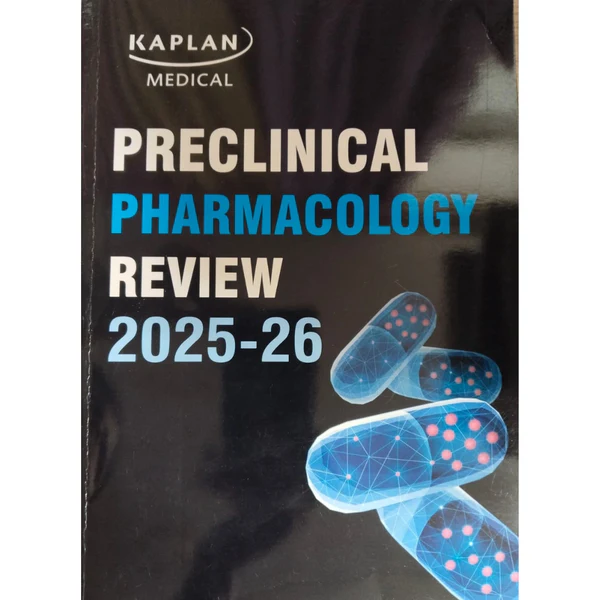
Description
Kaplan Preclinical Pharmacology Review 2025 2026
Kaplan Preclinical Pharmacology Review 2025 2026 – The Most Current USMLE-Aligned Pharmacology Review for Today’s Medical Students
When it comes to USMLE Step 1 pharmacology preparation, Kaplan has been the name students trust most — and the Kaplan Preclinical Pharmacology Review 2025 2026 continues that tradition with fully updated, exam-calibrated content built for today’s licensing examination landscape. This is not just another pharmacology review book — it is the most current, rigorously updated edition of one of the most respected USMLE preparation resources available, reflecting the very latest examination blueprints, clinical pharmacology guidelines, and drug approval updates that matter most for the 2025 and 2026 examination cycles.
If you are preparing for USMLE Step 1 and want a pharmacology resource that is current, comprehensive, and written with examination success as its single most important goal, this is the edition that belongs at the top of your study stack.
What Does Kaplan Preclinical Pharmacology Review 2025 2026 Cover?
This edition delivers complete, high-yield pharmacology coverage across all preclinical systems, updated to reflect the most recent USMLE Step 1 examination blueprint and current clinical pharmacology practice. Every chapter is structured to maximise examination relevance and minimise time spent on content that rarely appears in testing.
Core pharmacological systems and topics covered include:
- Principles of pharmacology — pharmacokinetics, pharmacodynamics, receptor theory, drug metabolism, and toxicology
- Autonomic pharmacology — cholinergic, adrenergic, and neuromuscular pharmacology with clinical applications
- Central nervous system pharmacology — opioid analgesics, antidepressants, antiepileptics, antipsychotics, anxiolytics, and anaesthetic agents
- Cardiovascular pharmacology — antihypertensives, antiarrhythmics, anticoagulants, lipid-lowering agents, and heart failure drugs
- Respiratory pharmacology — bronchodilators, inhaled steroids, leukotriene modifiers, and antihistamines
- Musculoskeletal and anti-inflammatory pharmacology — NSAIDs, corticosteroids, DMARDs, biologic agents, and gout management
- Endocrine pharmacology — insulin formulations, oral antidiabetics, thyroid agents, adrenal pharmacology, and reproductive hormones
- Antimicrobial pharmacology — antibiotic classification, mechanisms, resistance, antifungals, antivirals, and antiparasitic drugs
- Chemotherapy, immunosuppressants, and newly approved therapeutic agents
- Renal and gastrointestinal pharmacology
The musculoskeletal pharmacology chapters — covering NSAIDs, disease-modifying antirheumatic drugs, biologic therapies, corticosteroid use, and uric acid-lowering agents — are particularly valuable for students who also work with orthopedic surgery books, providing the pharmacological foundation that surgical and musculoskeletal clinical training demands.
Who Should Use This Book?
MBBS and Undergraduate Medical Students
Among the most up-to-date options available within the category of MBBS books and USMLE preparation resources, this edition is essential for any student preparing for Step 1 in the 2025 or 2026 examination cycle. Its annually updated content ensures students are studying the most current drug information — not material from two or three years ago — which makes a measurable difference in examination performance.
Orthopedic and Rheumatology Trainees
For trainees who want their pharmacology knowledge aligned with the most current clinical guidelines, this edition delivers exactly that — particularly in musculoskeletal pharmacology, biologic therapy, anti-inflammatory management, and bone metabolism. Used alongside anatomy books and clinical medicine books, it supports a current, evidence-based pharmacological foundation for specialty practice in both orthopedics and rheumatology.
Physiotherapy Students
For students seeking physiotherapy books that include current pharmacological content, this Kaplan edition offers the most up-to-date coverage of analgesic classes, anti-inflammatory agents, muscle relaxants, and cardiovascular drugs — all relevant to physiotherapy clinical practice and academic assessment in the current academic year.
Practicing Doctors and Healthcare Educators
Clinicians preparing for board examinations or refreshing their pharmacological knowledge in line with the latest guidelines will find this edition particularly valuable. It integrates naturally into current healthcare education resources used for structured self-study and licensing examination preparation in the 2025–2026 period.
Clinical and Educational Benefits
What genuinely distinguishes the Kaplan Preclinical Pharmacology Review 2025 2026 from older editions and competing medical textbooks is the currency of its content. Pharmacology is one of the fastest-evolving areas of medicine — new drugs receive approval, guidelines change, and examination blueprints are updated regularly. This edition captures all of those changes, ensuring that every hour of revision is spent on material that is actually current and actually testable.
Furthermore, Kaplan’s signature teaching approach — building clinical reasoning rather than rote memorisation — means students who work through this resource develop the kind of applied pharmacological thinking that the revised USMLE Step 1 format increasingly rewards over simple drug recall.
Key Features of This Edition
- ✅ Fully updated for the 2025–2026 USMLE Step 1 examination blueprint and drug approval landscape
- ✅ High-yield content with Kaplan’s signature clinical reasoning approach throughout
- ✅ Newly approved drugs and updated therapeutic guidelines integrated into relevant chapters
- ✅ Clear diagrams, drug class comparison tables, and high-yield summary boxes
- ✅ USMLE-style practice questions with detailed answer explanations
- ✅ Strong leukotriene modifiers, biologic agents, and precision medicine pharmacology coverage
- ✅ Ideal current companion to surgery books and clinical Step 1 preparation resources
Practical Learning Advantages
The single most important practical advantage this edition offers is being current. Medical students studying for 2025 and 2026 examinations who use older pharmacology review books risk encountering outdated drug classifications, superseded clinical guidelines, and examination content that no longer reflects what Step 1 actually tests. This edition eliminates that risk entirely — giving students the confidence that comes from knowing their pharmacology knowledge matches the current examination landscape.
When paired with anatomy books and a physiology review resource, this Kaplan pharmacology review rounds out the preclinical triad with current, examination-aligned content that keeps the entire study programme cohesive and up to date.
Additionally, for students who are simultaneously working through orthopedic surgery books, the updated musculoskeletal pharmacology chapters in this edition — covering current biologic therapy protocols, revised DMARD guidelines, modern analgesic management, and updated anti-inflammatory prescribing — provide a pharmacological layer that reflects contemporary orthopaedic and rheumatological clinical practice, not the standards of several years ago.
Frequently Asked Questions (FAQ)
Is Kaplan Preclinical Pharmacology Review 2025 2026 specifically updated for Step 1?
Yes, absolutely. This edition is updated annually to reflect the current USMLE Step 1 blueprint, newly approved drugs, and the latest clinical pharmacology guidelines. Students preparing for Step 1 in 2025 or 2026 can be confident they are studying the most current and relevant pharmacology content available.
How does the 2025 2026 edition differ from the previous year’s edition?
Each annual Kaplan update reflects changes to the USMLE examination blueprint, newly approved therapeutic agents, revised drug classifications, updated clinical guidelines, and refreshed practice questions — ensuring the content aligns with what the current examination cycle actually tests rather than what was relevant in prior years.
Is this edition suitable for international medical graduates preparing for USMLE?
Yes. International medical graduates preparing for USMLE Step 1 in 2025 or 2026 will find this edition particularly valuable because of its current drug content, updated examination alignment, and Kaplan’s proven track record of helping IMGs achieve competitive Step 1 pharmacology scores.
Is this book useful for rheumatology and orthopedic trainees?
Yes. The updated coverage of biologic agents, DMARDs, corticosteroid management, analgesic protocols, and bone-modifying drugs makes this edition directly relevant for orthopedic and rheumatology trainees who want pharmacology knowledge aligned with the most current clinical and examination standards.
Can physiotherapy students use this Kaplan edition for pharmacology preparation?
Definitely. Physiotherapy students who need current pharmacological knowledge for academic assessments will benefit from the updated analgesic, anti-inflammatory, muscle relaxant, and cardiovascular drug content in this edition — all presented in a clinically focused, accessible format.
Order Kaplan Preclinical Pharmacology Review 2025 2026 and Prepare With the Most Current Resource Available
In a subject that evolves as rapidly as pharmacology, being current is not optional — it is essential. The Kaplan Preclinical Pharmacology Review 2025 2026 gives you the most up-to-date, examination-aligned pharmacology resource available for the current USMLE preparation cycle — built on Kaplan’s decades of proven results and updated to reflect everything that matters for 2025 and 2026 examination candidates.
It stands as one of the most current and strategically valuable pharmacology medical textbooks in the Kaplan USMLE preparation portfolio — and for students who want to walk into Step 1 knowing their pharmacology is current, comprehensive, and examination-ready, it is the edition to choose.
Add it to your cart today and explore our complete range of MBBS books, clinical medicine books, and healthcare education resources — because in medicine, current knowledge is not just an advantage, it is a responsibility.
Reviews
There are no reviews yet.